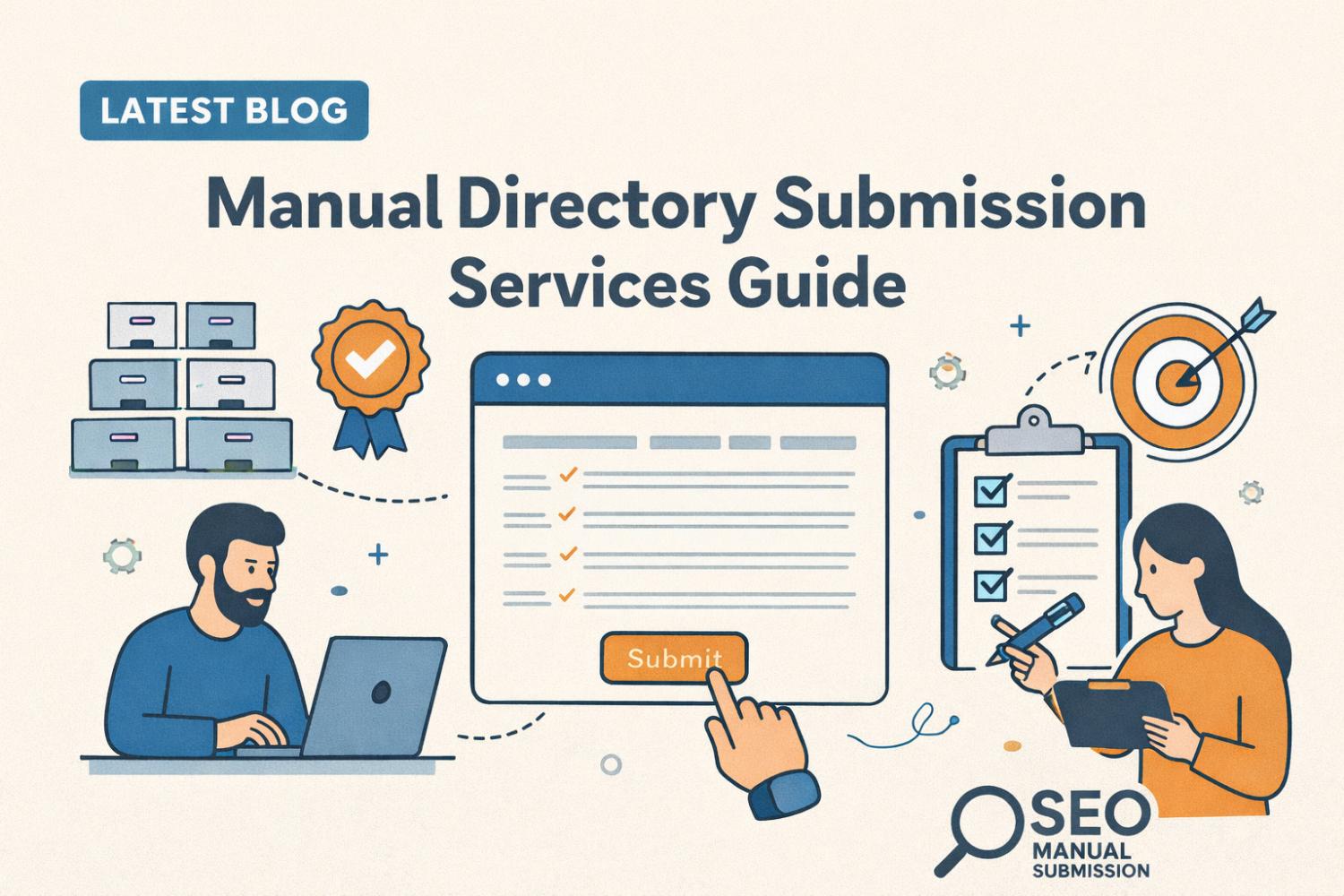
Manual Directory Submission Services Guide
A detailed guide explaining manual directory submission, its types, benefits, and how it fits into a professional SEO strategy when executed manually with relevance and quality control.
Manual Directory Submission: Types, Benefits & Strategic Role in Modern SEO
Manual directory submission has been discussed, misused, and often misunderstood in the SEO industry for years. While many marketers dismiss it as outdated, the reality is more nuanced. The decline in results came not from the method itself, but from how it was abused—through automation, irrelevant directories, and mass submissions without quality control.
When directory submission is executed manually, with proper relevance checks, category accuracy, and controlled pacing, it continues to play a valuable supporting role in search engine optimization. Especially for new websites, local businesses, niche industries, and brands building foundational authority, manual directory submission remains a practical and measurable off-page SEO technique.
This guide explains manual directory submission in its correct form, explores its different types, outlines real benefits, and clarifies how it fits into a sustainable SEO strategy.
What Is Manual Directory Submission?
Manual directory submission is the process of submitting a website to web directories by hand rather than using automated tools or software. Each submission involves reviewing the directory’s relevance, choosing the most appropriate category, and creating unique titles and descriptions that accurately represent the business or website.
Unlike automated directory submission, manual work respects editorial guidelines. Submissions are made selectively, often to directories that still maintain review processes, moderation standards, and topic relevance. The focus is not on volume, but on consistency, accuracy, and approval quality.
When done correctly, manual directory submission creates legitimate backlinks, improves brand visibility across the web, and helps search engines understand a website’s niche, geography, and credibility.
Why Manual Directory Submission Still Works When Done Correctly
Search engines evaluate websites through multiple trust signals, not just content and backlinks from high-authority blogs. Directories—when relevant and human-reviewed—still contribute to these signals by providing structured citations, contextual references, and diversified link sources.
Manual directory submission supports SEO by:
-
Helping search engines discover and crawl new websites more efficiently
-
Building early authority signals for low-domain or newly launched sites
-
Strengthening brand consistency through repeated but controlled mentions
-
Supporting local and regional relevance when submissions are geo-specific
The key factor is execution. Manual selection, relevant categories, unique descriptions, and a natural submission pace determine whether directory links add value or become noise.
Types of Manual Directory Submission
Not all directory submissions serve the same purpose. Different strategies exist depending on business goals, website maturity, and geographic focus. Below are the most commonly used and effective types of manual directory submission.
Fast Manual Directory Submission
Fast manual directory submission focuses on submitting a website to directories that offer quicker approval cycles. These directories typically review listings within a short timeframe while still maintaining editorial checks.
This approach is often used when a website needs early exposure—such as during a launch phase, promotional campaign, or when supporting newly published service pages. While faster, it is still performed manually to ensure accuracy and relevance.
Fast submissions are useful for accelerating visibility but should be balanced with slower methods to maintain natural link velocity.
Fast Manual Directory Submission Packages by SEO Manual Submission.
Slow Manual Directory Submission
Slow manual directory submission emphasizes gradual link acquisition over time. Submissions are spaced out deliberately to mimic organic growth and avoid unnatural spikes in backlink profiles.
This approach is especially effective for long-term SEO campaigns, authority building, and websites operating in competitive or sensitive niches. By maintaining a steady submission pace, slow manual directory submission aligns well with search engine expectations for natural link development.
It is often preferred for established websites that aim to strengthen trust rather than achieve quick visibility.
Slow Manual Directory Submission Packages by SEO Manual Submission.
Regional Directory Submission
Regional directory submission targets directories that are specific to a country, state, city, or locality. These directories play a crucial role in geo-relevance, making them particularly valuable for local businesses and service providers.
Listings in regional directories help search engines associate a website with a specific geographic area. This supports local SEO efforts, improves map visibility, and enhances trust among users searching within a defined region.
Regional directory submission is commonly combined with local SEO and citation building strategies.
Business Directory Submission
Business directory submission focuses on directories that list companies by industry, service type, or business category. These directories often include company details such as business name, website URL, description, and sometimes contact information.
Such submissions help establish legitimacy, brand presence, and structured citations across the web. For small and medium businesses, business directories act as trust indicators, especially when directories are recognized within the industry.
Consistency in business details across these directories is essential to maximize SEO value.
Deep Link Directory Submission
Deep link directory submission goes beyond submitting the homepage. It involves promoting internal pages such as service pages, category pages, or location-specific URLs.
This technique supports internal SEO structure by distributing link equity beyond the homepage. It helps individual pages gain visibility, improves indexing of deeper content, and strengthens topical relevance.
Deep link submissions are particularly useful for websites with multiple services, locations, or content categories.
Guaranteed Directory Listing
Guaranteed directory listing focuses on directories where approval is assured, provided guidelines are followed. These directories typically require higher editorial standards and may involve paid or verified listing processes.
The primary advantage is certainty. Each submission results in a live listing, allowing precise reporting and measurable outcomes. Guaranteed web directories listings are often used by businesses that prioritize transparency, accountability, and quality over quantity.
This method is commonly selected by agencies and brands that require clear deliverables and reporting.
Manual vs Automated Directory Submission
The reputation of directory submission suffered largely due to automated tools that flooded low-quality directories with duplicate content. Automated submissions ignore relevance, category accuracy, and editorial guidelines, often resulting in spam-like link profiles.
Manual directory submission differs significantly:
-
Each directory is reviewed before submission
-
Categories are chosen based on business relevance
-
Titles and descriptions are customized
-
Submission pacing is controlled
-
Approval status is monitored
Automation focuses on speed and volume. Manual submission prioritizes accuracy, quality, and long-term SEO safety. Search engines can easily differentiate between the two based on patterns and link behavior.
Who Should Use Manual Directory Submission?
Manual directory submission is not limited to a single type of website. It serves multiple business models when applied correctly.
New websites benefit from faster discovery and initial authority signals. Local businesses gain geographic relevance and citation support. Niche websites strengthen contextual trust through industry-specific directories. SEO agencies use it as a foundational layer for diversified link building.
Even established websites can use manual directory submission to reinforce brand presence and support ongoing SEO campaigns.
How Manual Directory Submission Fits into a Complete SEO Strategy
Directory submission should never be treated as a standalone solution. Its true value appears when integrated with broader SEO efforts.
When combined with on-page optimization, quality content creation, and contextual link building, directory submissions act as a stabilizing layer. They support crawlability, strengthen brand signals, and diversify backlink profiles.
Used alongside content marketing and advanced link building techniques, manual directory submission contributes to a balanced and sustainable SEO framework.
Common Mistakes That Reduce Directory Submission Value
Many businesses fail to see results from directory submission due to execution errors. Submitting to irrelevant categories, using identical descriptions across multiple directories, or relying on automated tools are common pitfalls.
Over-submission within a short timeframe can also create unnatural link patterns. Ignoring directory quality and focusing solely on numbers often leads to diminished SEO value.
Manual directory submission requires discipline, planning, and quality control to deliver consistent results.
Why the Approach of SEO Manual Submission Is Different
Experience and process define outcomes. A structured manual workflow, directory vetting, category relevance checks, and controlled pacing form the foundation of effective directory submission.
Instead of treating directories as a volume-based tactic, SEO Manual Submission approaches them as part of a broader SEO ecosystem. Each submission is aligned with the website’s niche, geography, and long-term SEO objectives.
Transparent reporting, manual execution, and strategic integration differentiate professional directory submission from outdated practices.
Conclusion
Manual directory submission is neither obsolete nor magical. Its effectiveness depends entirely on how it is executed and how well it complements other SEO activities.
When performed manually, with relevance, moderation, and strategic intent, directory submission continues to support visibility, authority building, and search engine trust. It remains especially valuable for new websites, local businesses, and brands seeking a stable SEO foundation.
The method has not failed—only shortcuts have. A disciplined, manual approach keeps directory submission relevant within modern SEO strategies.
Comments:
Leave A Comment:
Author

Recent Posts




08 Jan 2026

23 Dec 2025



Share Page
Related Keywords
Subscribe to our newsletter
To get latest news / trends in digital marketing subscribe to our newsletter. We don't spam your inbox, we sent only latest news, offers one or hardly two times per month.